What to wear
What to wear horseback riding
Riding clothes don't need to be fancy or expensive. Each piece has a job, and once you know the job you can usually find something in your closet that does it.
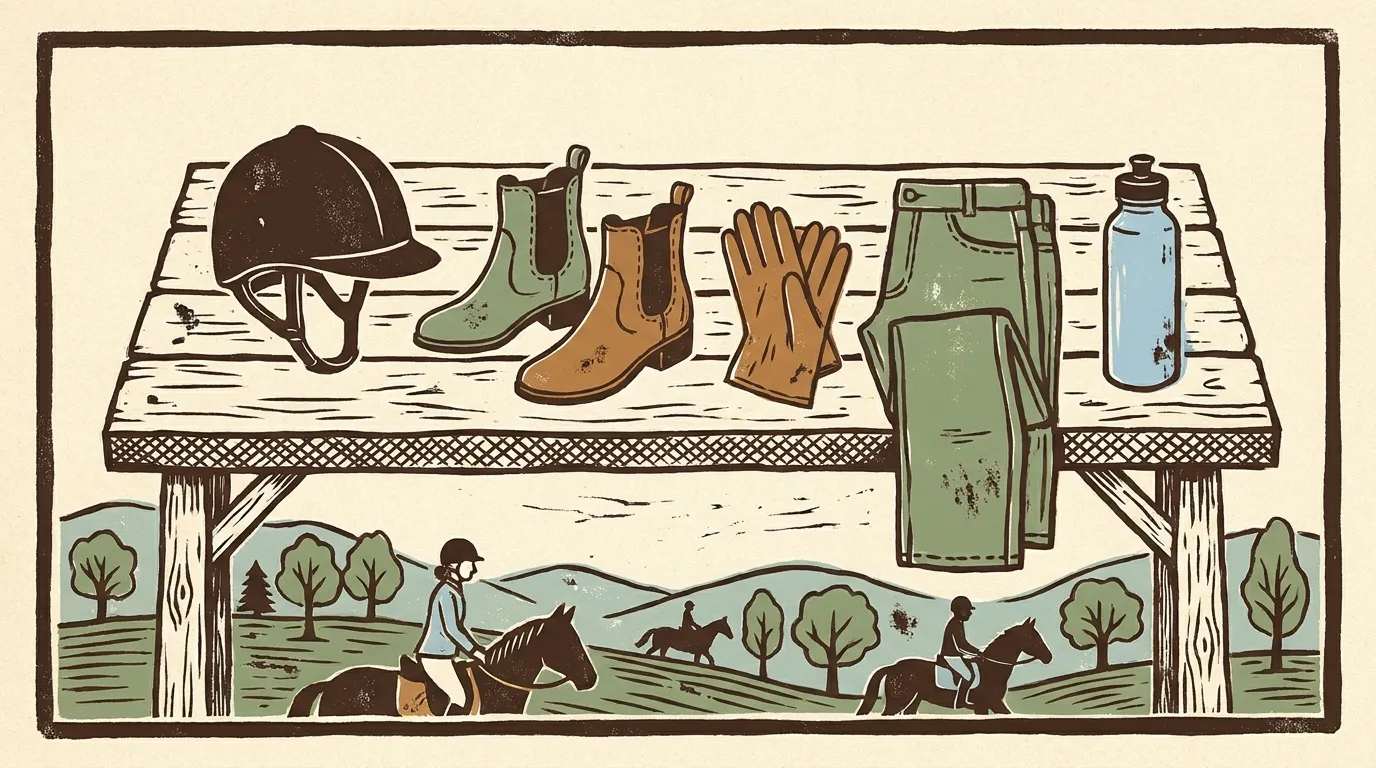
The right clothes make a ride more comfortable, and a few of them protect you. For a first trail ride or lesson, the short version is: a riding helmet, boots or sturdy shoes with a small heel, long pants, layers you can manage, and maybe a pair of thin gloves. The rest of this guide explains why, and what to leave behind. Stables can have their own dress rules, so check with the stable when you book.
A riding helmet
A helmet is the most important thing you'll wear. Many stables lend helmets to riders, and some require everyone to wear one. If you're buying your own, look for an equestrian helmet. In the United States, riding helmets are tested to the ASTM F1163 standard, and certified helmets usually carry an SEI tag or sticker inside. A bike or ski helmet isn't designed for the kinds of falls that happen around horses.
How it should fit:
- Snug, not tight. When you move your head, the helmet should move with it rather than slide around.
- Level. It should sit just above your eyebrows, not tipped back on your forehead.
- Strapped. Fasten the harness every time, adjusted so it's firm under the chin without pinching.
Wear long hair in a low ponytail or braid so the helmet sits properly, and leave baseball caps and wide-brimmed hats for after the ride. Helmet makers advise replacing a helmet after a hard fall, even if it looks fine, and over time as materials age. Follow the maker's guidance.
Boots with a small heel
Footwear matters more than most first-timers expect. The goal is a closed-toe boot or sturdy shoe with a smooth sole and a small, defined heel. The heel stops your foot from sliding forward through the stirrup, and a smooth sole lets your foot come out of the stirrup easily if it needs to.
Good choices:
- Paddock boots, the short ankle boots English riders wear for lessons.
- Tall riding boots, common for English riders who ride often or show.
- Cowboy boots, the standard for Western riding and many trail rides.
- Plain leather boots with a low heel and smooth sole that you already own.
Avoid sandals, flip-flops and open-toed shoes. Most stables won't let you ride in them, and horses can step on toes on the ground. Sneakers with no heel can slip through the stirrup. Hiking boots with deep, chunky tread can catch in it. Very wide boots can get wedged. If all you have are sneakers, ask the stable before you go. Some will tell you what they'll accept, and some lend boots.
Long pants
Wear long pants, even on a hot day. The stirrup leathers and the saddle rub against the inside of your legs, and bare skin chafes fast. Shorts, skirts and dresses don't work well on a horse.
- Jeans are fine for most trail rides. On longer rides, a thick inside seam can rub, so a softer pair is better.
- Stretchy pants or leggings work well, as long as they're not so thin that they slide on the saddle.
- Riding tights, breeches or jodhpurs are made for riding, with no inner seam where your legs touch the saddle. They're worth buying once you take regular lessons.
Tops and layers
Choose a top that fits close enough that it won't flap. Loose, billowing clothes can catch on the saddle or startle a horse, and so can a rain poncho that cracks in the wind. In cool weather, dress in thin layers you can put on or take off before you get on.
Once you're riding, don't take off a jacket or sweatshirt without asking the guide to stop the group. Pulling a layer over your head means letting go of the reins and waving fabric around, which some horses don't like.
In hot, sunny weather, a light long-sleeved shirt protects your arms from the sun. Wear sunscreen either way. In rain, a fitted, quiet rain jacket beats a poncho.
Gloves
Gloves aren't essential for a short trail ride, but they help. They give you a better grip on the reins, especially when your hands are sweaty or the reins are wet, and they prevent rubs and blisters. Thin riding gloves are best because you can still feel the reins. In cold weather, choose warm gloves that aren't so bulky you can't close your hand. Avoid big mittens.
Small things, and what to leave home
Worth bringing:
- Water, and sunscreen.
- Sunglasses, ideally with a strap so they can't fall off.
- A zipped pocket for your phone and keys. A phone in a back pocket gets sat on or falls out.
- Insect repellent in summer, put on before you meet the horse.
Leave at home, or in the car:
- Dangling jewelry and hoop earrings, which can catch on things.
- Loose scarves.
- Anything you'd have to hold in your hands. You need them for the reins.
- Large backpacks. Ask the stable if a small bag is allowed.
At a glance
| Part | Wear | Skip |
|---|---|---|
| Head | A certified riding helmet that fits, strap fastened | Baseball caps, bike or ski helmets |
| Feet | Boots with a small heel and a smooth sole | Sandals, sneakers with no heel, deep-tread hiking boots |
| Legs | Jeans, stretchy pants, riding tights or breeches | Shorts, skirts, dresses |
| Top | Fitted layers, a quiet rain jacket | Flapping ponchos, loose scarves |
| Hands | Thin riding gloves | Bulky mittens |
| Extras | Water, sunscreen, a zipped pocket | Dangling jewelry, things you'd have to hold |
If you start taking lessons
Regular riders build up a small kit over time. English riders usually wear breeches or riding tights, paddock boots with half chaps (leather or synthetic leg wraps that protect the lower leg), or tall boots. Western riders usually wear jeans and cowboy boots. Riders who jump often wear a body protector vest as well, and some barns require one for certain kinds of jumping. Your instructor will tell you what their barn expects, and it's worth asking before you buy anything.
Questions
- Can I wear sneakers horseback riding?
- Some stables allow them for a slow trail ride, but sneakers with no heel can slide through the stirrup. A boot or shoe with a small heel and a smooth sole is better. Ask the stable what it accepts.
- Do I need to buy a helmet for my first ride?
- Usually not. Many stables lend helmets. If you ride often, your own certified helmet will fit better, and you'll know its history.
- Are jeans okay?
- Yes, for most trail rides. On a long ride a thick inside seam can rub, so pick a soft, comfortable pair.
- What should kids wear?
- The same things as adults: a helmet that fits, boots or sturdy shoes with a heel, long pants and layers. Ask the stable whether it has helmets in children's sizes.
- What about very hot or cold days?
- In heat, wear light long pants, a breathable long-sleeved shirt and sunscreen, and bring water. In cold, wear thin layers and warm gloves, and put everything on before you mount.