Lessons
Choosing riding lessons
Lessons are how most people actually learn to ride. Here's how lesson formats compare, what a first lesson looks like, how riders progress, and how to pick an instructor.
A trail ride gives you a taste of riding. Lessons teach you to do it yourself: to stay balanced at every gait, to ask the horse clearly for what you want, and to handle a horse on the ground. Good lessons are worth taking whether you're a child starting out, an adult who always wanted to ride, or someone coming back after years away. Finding a good fit comes down to the format, the horses and the instructor.
Where lessons happen
Lessons are taught at a few kinds of places:
- Riding schools and lesson barns, built around teaching, with a string of school horses and several instructors.
- Boarding and training barns, where a resident trainer teaches boarders and outside students.
- Trail stables and ranches that also offer lessons, often Western.
- Therapeutic riding centers, which teach riders with disabilities using trained instructors and volunteers. See therapeutic riding programs.
An indoor or covered arena means fewer canceled lessons in rain, heat or snow, so it's worth asking about if your weather is unpredictable. Start with the list of stables with riding lessons, or the shorter list of stables that welcome beginners.
Private, semi-private or group
| Format | What it's like | Good for |
|---|---|---|
| Private | One rider, the instructor's full attention, a plan built around you | Complete beginners, nervous riders, specific goals |
| Semi-private | Two or three riders, still plenty of attention | Friends or siblings at a similar level |
| Group | Several riders at a similar level, learning by doing and by watching | Riders who have the basics and want regular saddle time |
Many barns start new riders with a few private lessons, then move them into a group once they can steer, stop and stay balanced on their own. Group lessons are often the more affordable way to ride every week, and watching others ride teaches more than you'd expect. Ask how the barn groups riders, and how many riders are in a typical group.
Lesson horses
A good lesson horse, sometimes called a schoolmaster, is calm, patient and experienced. It forgives the mixed signals beginners give, but still responds when a rider gets it right. These horses are some of the most valuable animals in any barn, and the way a barn keeps them says a lot about the program.
- Look for lesson horses at a healthy weight, with cared-for hooves and a relaxed manner.
- Expect the instructor to choose your horse. Matching horse to rider is part of their job, and you may ride several different horses over time. That's good for your riding.
- Ask how many lessons each horse works a day and whether horses get days off. A barn that protects its horses' workload tends to have happier horses.
What a first lesson looks like
Every barn runs things a little differently, but a first lesson usually goes something like this:
- Arriving and paperwork. You sign a release form, and staff fit you with a helmet if you don't have one.
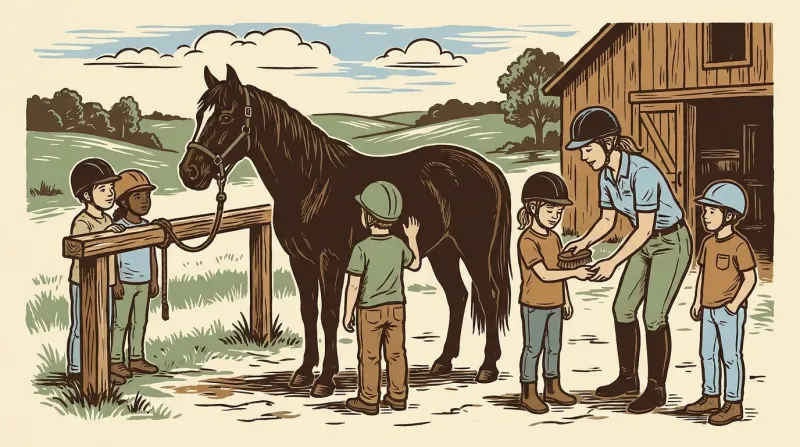
- Meeting the horse. Many barns teach you to groom and tack up from the first day: brushing, cleaning out hooves, and putting on the saddle and bridle with help. Others have the horse ready for your first lesson.
- Leading and mounting. You learn to lead the horse to the arena, check the girth and get on from a mounting block.
- Position. Sit tall, look up, keep your heels down and your hands quiet. You'll hear these again and again.
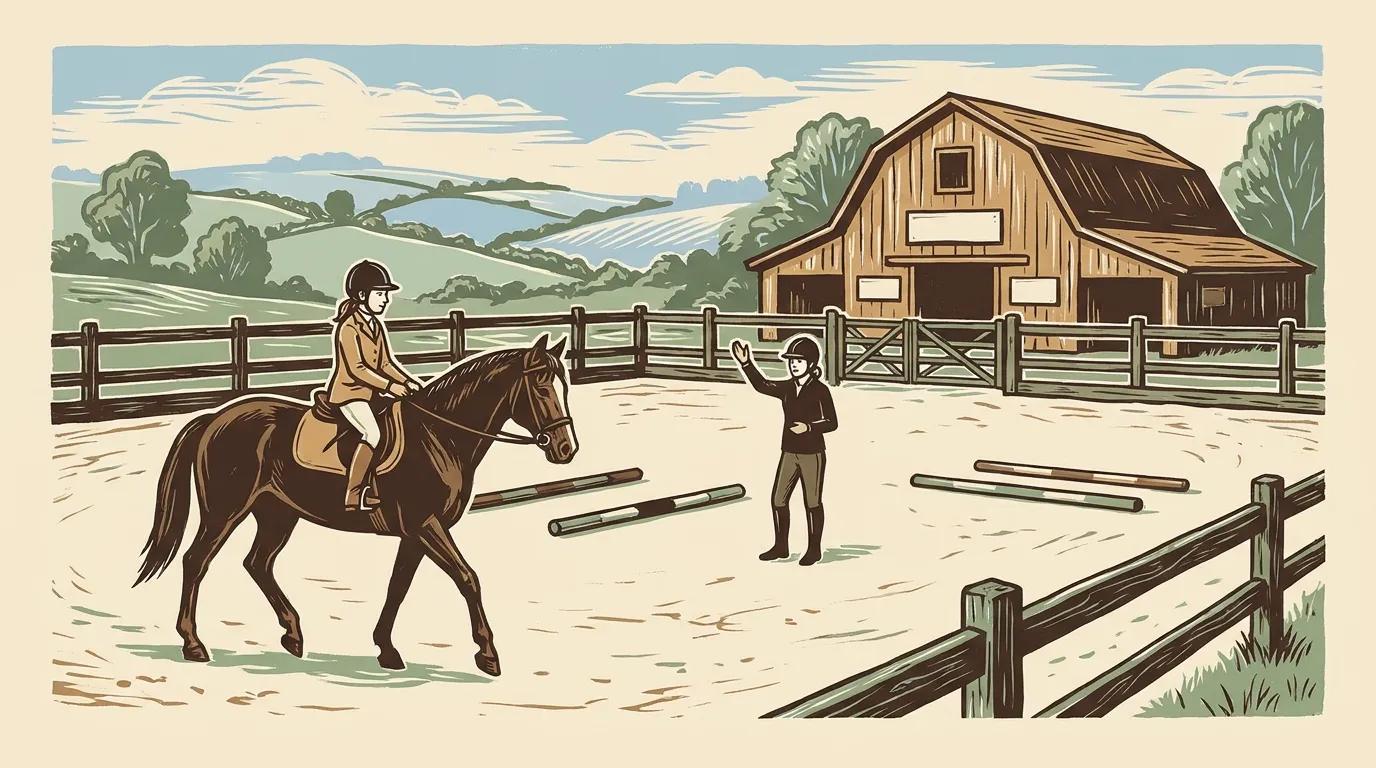
- Walk, halt and steer. You practice starting, stopping and turning, often on a lunge line (a long line the instructor holds from the ground) or with a helper leading the horse.
- Maybe a little trot, if you're comfortable and the instructor thinks you're ready.
- Finishing up. You dismount, untack, brush the horse and put things away. That ground work is part of learning to ride.
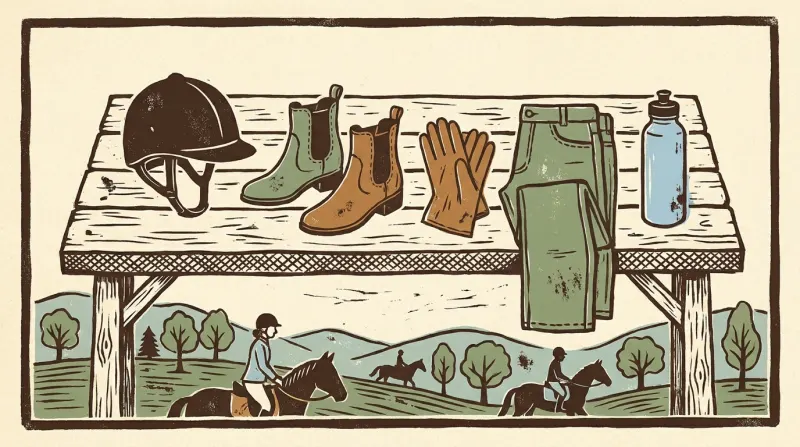
Wear long pants and boots with a small heel. Our guide on what to wear horseback riding covers the rest.
Tip
Ask to watch a lesson before you book. Twenty minutes on the rail tells you how the instructor explains things, how the horses behave, and whether riders are smiling.
How riders progress
There's no set timeline. Progress depends on how often you ride, the horses you ride, your fitness and your confidence. A common path looks like this:
- Walk and trot. Steering, stopping, and learning to post the trot (English) or sit the jog (Western).
- Independent balance. Riding without holding on, the two-point position, and riding a pattern on your own.
- Canter or lope. Usually once you're steady and in control at the trot.
- A direction. Small jumps, dressage tests, Western patterns, trail riding outside the arena, or local shows.
Riding regularly matters more than riding a lot at once. A weekly lesson you keep up for months beats a burst of lessons followed by a long gap. Many riders lease or half-lease a horse before thinking about buying one. That gives you more saddle time without the full commitment of owning a horse.
Choosing an instructor
A good instructor explains clearly, stays calm, keeps an eye on every rider, and is honest about what you're ready for. Some instructors hold certifications from groups such as the Certified Horsemanship Association or the American Riding Instructors Association. Many good instructors don't, and experience and teaching style matter just as much. Questions worth asking:
- Do you teach English, Western or both? Our guide to English vs Western riding explains the difference.
- What are your rider requirements for age, experience and weight?
- Do riders need their own helmet, and are helmets required?
- What happens if I cancel, or if the weather does?
- Do you offer lesson packages, and how do makeup lessons work?
- What would my first month of lessons look like?
Questions
- How many lessons until I can ride on my own?
- It differs for everyone. It depends on how often you ride, the horses and your confidence. Your instructor can tell you how you're progressing.
- Am I too old to start riding?
- Adults start riding all the time. Tell the instructor about any health concerns, and ask about the barn's rider requirements.
- Do I need my own horse?
- No. Lesson barns provide school horses. Many riders take lessons for years before leasing or buying a horse.
- Should I start English or Western?
- Either. Pick the style that matches your goals, or the nearby barn with a good instructor and well-kept horses. The basics carry over.
- How much do riding lessons cost?
- Rates vary by barn, region and lesson format, so we don't list prices. Ask each barn for its current rates and package options.
Find riding lessons
- Stables with riding lessons, by state.
- English and Western riding lessons.
- Stables that welcome beginners.
- Therapeutic riding programs.