Horse camp
Horse camp: what to expect
Horse camp is a week or more of riding, horse care and barn life. Here's what camps usually include, what to pack, and what to ask before you sign up.
For a horse-crazy kid, a week at horse camp can be the best part of the summer. Campers spend their days around horses: riding, grooming, feeding, cleaning tack and learning how a barn works. Camps run at riding schools, boarding barns, ranches and traditional summer camps, and they vary a lot in length, riding time and focus. Knowing what's typical, and what to ask, makes it easier to find a good fit.
Kinds of horse camps
- Day camps at a local stable. Campers arrive in the morning and go home in the afternoon. This is the most common kind, and a good first camp.
- Overnight camps, where riders sleep at the camp for a week or longer. Some are dedicated riding camps, and some are general summer camps with a riding program.
- School-break camps, shorter sessions some stables run during spring or winter breaks.
- Camps for older riders and adults, often called clinics or riding vacations, built around lessons or trail riding.
- Therapeutic riding camps, run by programs that teach riders with disabilities. See therapeutic riding programs.
Browse stables with horse camps. A stable is listed there only when a customer review or its own website mentions its camp.
What a camp day usually includes
Most horse camps mix time in the saddle with time on the ground. A typical day might include:
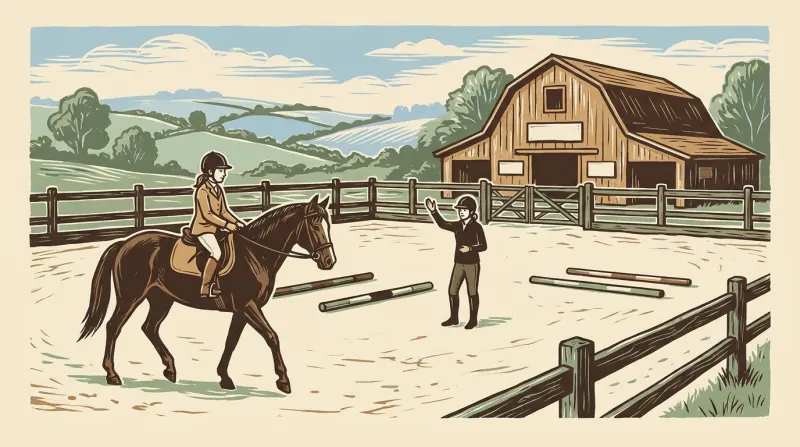
- A riding lesson, usually in small groups sorted by experience.
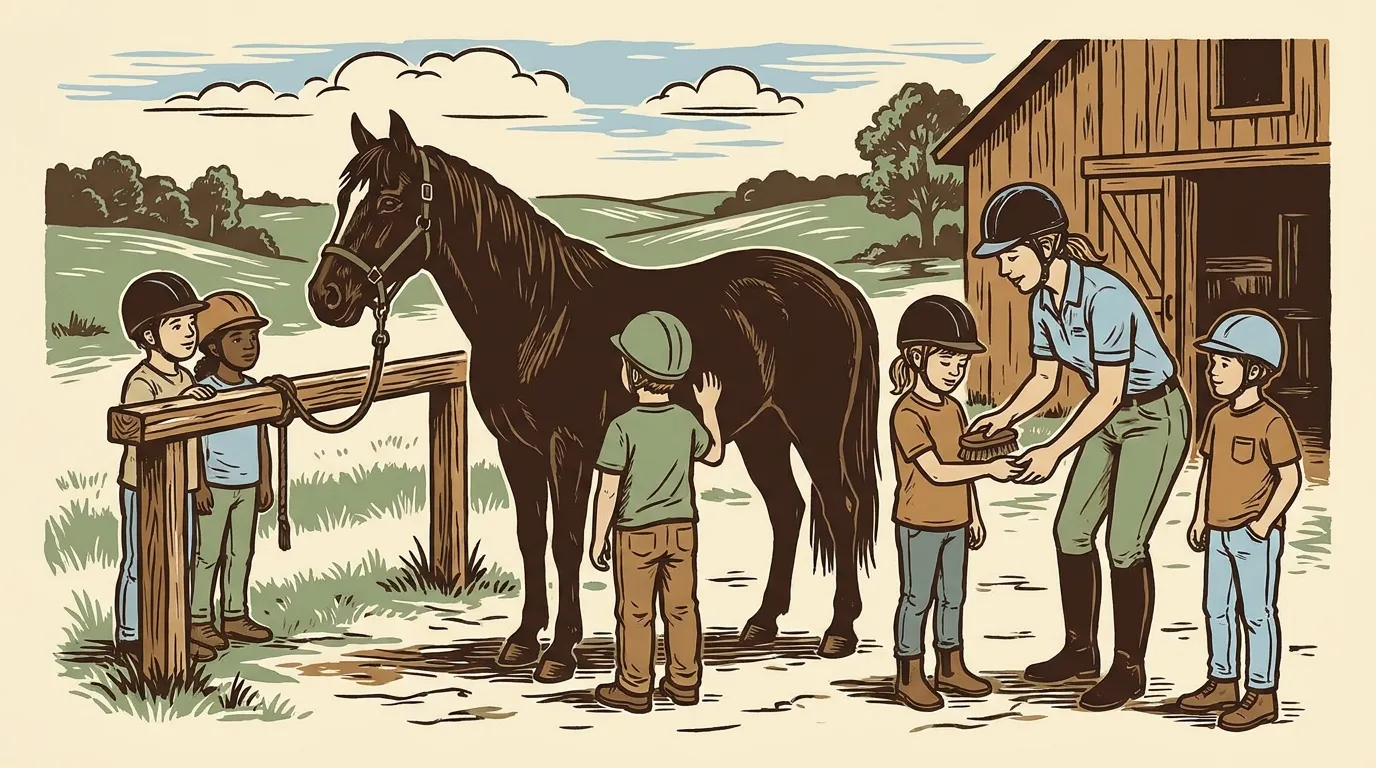
- Horse care: grooming, picking out hooves, feeding, watering and cleaning stalls.
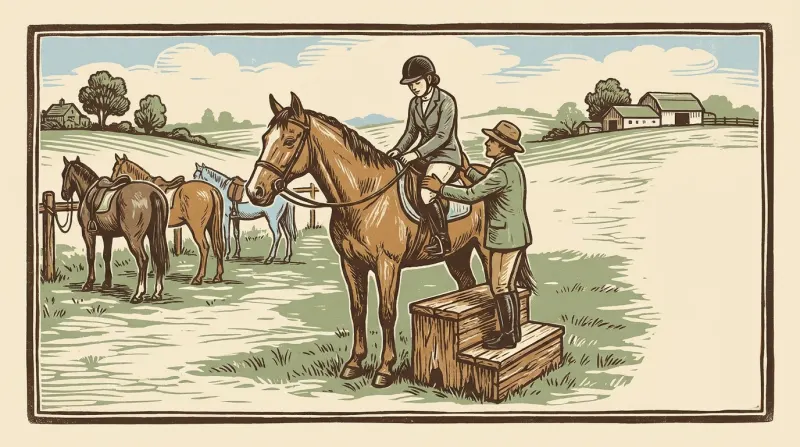
- Tacking up and learning how the saddle and bridle fit.
- Safety around horses: how to approach, lead and tie a horse, and where to stand.
- Horse knowledge: breeds, colors and markings, parts of the horse, basic health and feeding.
- Tack cleaning, games, crafts and quiet time out of the sun.
- Extras at some camps, such as a trail ride, games on horseback, or a small show or demonstration for families at the end of the week.
How much time campers spend riding varies a lot from camp to camp. If riding time matters most to your child, ask about it directly.
Is your child ready?
Many camps take complete beginners and group campers by experience. Before signing up, think about whether your child:
- is keen on horses, not just on the idea of horses,
- can follow instructions from an adult who isn't a parent,
- is comfortable around large animals, and doesn't mind getting dirty,
- can handle a full day outside in summer weather.
If you're not sure, a pony ride or a short series of riding lessons first is a gentle way to find out. Every camp sets its own rider requirements, including age, so check those before you plan around a session.
What to pack
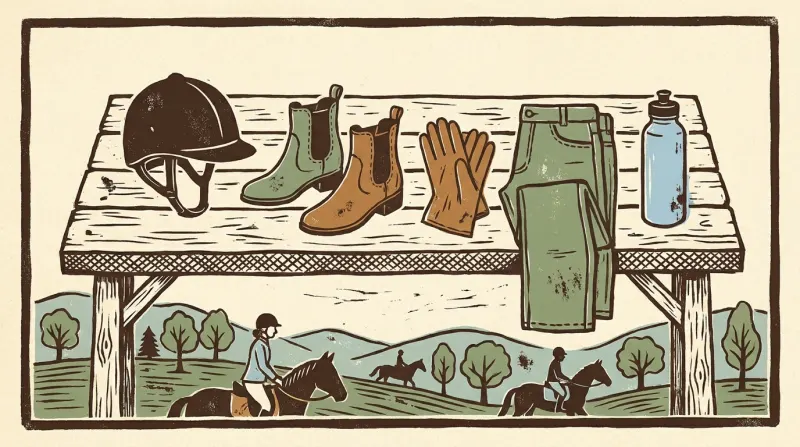
Follow the camp's own list if it sends one. Most lists look something like this:
| Item | Why |
|---|---|
| Riding helmet | Many camps require one for riding. Ask whether the camp lends them, and make sure your own fits and is certified for riding. |
| Boots with a small heel | Keeps feet from sliding through the stirrup and protects toes on the ground. No sandals. |
| Long pants, more than one pair | For riding comfort. Barn days are messy, so pack spares. |
| T-shirts and a light layer | Mornings can be cool and afternoons hot. |
| Rain jacket | Barn chores don't stop for a shower. |
| Sunscreen and a hat | The hat is for time off the horse, since it won't fit under a helmet. |
| Water bottle | Labeled and refillable. |
| Lunch and snacks | For day camps that don't provide food. Ask if anything isn't allowed around the horses. |
| Insect repellent | Barns attract flies. |
| A change of clothes | For the ride home. |
| Riding gloves | Optional, but they help with grip and blisters. |
Label everything, and leave jewelry and valuables at home. For overnight camps, the camp's list will add bedding, toiletries and evening clothes. Our guide on what to wear horseback riding explains why helmets and heeled boots matter.
Tip
Break in new boots before camp starts. A week of stiff boots and blisters can take the fun out of it fast.
Questions to ask the camp
- Riders. What are your rider requirements? How do you group campers by experience?
- Riding time. How much of each day is spent on a horse?
- Supervision. How many campers are there per instructor or counselor, both mounted and on the ground?
- Staff. What experience do the instructors have? Are staff trained in first aid?
- Helmets and boots. Are helmets required for everyone on a horse? Do you lend them?
- Horses. How are horses matched to campers? Will my child ride the same horse all week?
- Weather. What happens on very hot days or during storms?
- Health. How do you handle allergies (hay, dust, bees), medications and medical forms?
- Families. Can parents watch? What are the drop-off and pickup rules? How will you contact us during the day?
- Payment. What's the refund policy if my child gets sick or the camp is canceled?
After camp
Many kids come home wanting more. Weekly lessons are the usual next step, and many camp barns offer them all year. Our guide to choosing riding lessons explains private and group lessons, what a first lesson looks like and how riders progress.
Questions
- Does my child need riding experience for horse camp?
- Many camps welcome beginners and group riders by experience. Some sessions are for experienced riders only, so ask when you book.
- What age can kids start horse camp?
- Each camp sets its own age range, so we don't list one. Ask the camp directly.
- Are there horse camps for adults?
- Yes. Some stables run adult camps, clinics or riding weekends. Ask local stables what they offer.
- Will my child ride every day?
- At riding camps, usually, but the amount of riding time varies a lot. Ask the camp how the day is split.
- What if my child gets nervous?
- Tell the instructors at drop-off. Good staff are used to nervous campers and can give them a quieter horse or more time on the ground.
Find a horse camp
- Stables with horse camps, by state.
- Stables with riding lessons, for after camp.
- Pony rides for younger children.