Riding styles
English vs Western riding
The two main riding styles in the United States share the same basics but use different saddles, different rein habits and different goals. Here's how they compare, and how to pick one for lessons.
When you call a stable about lessons, one of the first questions is often "English or Western?" Both are ways of riding the same animal, and a good rider in either style sits balanced, uses light, clear signals and pays attention to the horse. The differences come from history. Western riding grew out of ranch work, where riders spent long days in the saddle working cattle. English riding comes from European traditions of cavalry, fox hunting and riding schools. The equipment, the habits and the competitions each style grew into still reflect those roots.
The saddles
The saddle is the easiest difference to spot.
- An English saddle is small, light and fairly flat, with no horn. It puts the rider close to the horse, so you feel the horse's movement and the horse feels your legs and seat clearly. That close contact suits jumping and precise flatwork.
- A Western saddle is bigger and heavier, with a deeper seat, a high back (the cantle) and a horn at the front. Its wide panels spread the rider's weight over more of the horse's back, which helps on long days. The horn was made for working with a rope. Today many riders simply hold it when they need a bit of extra balance.
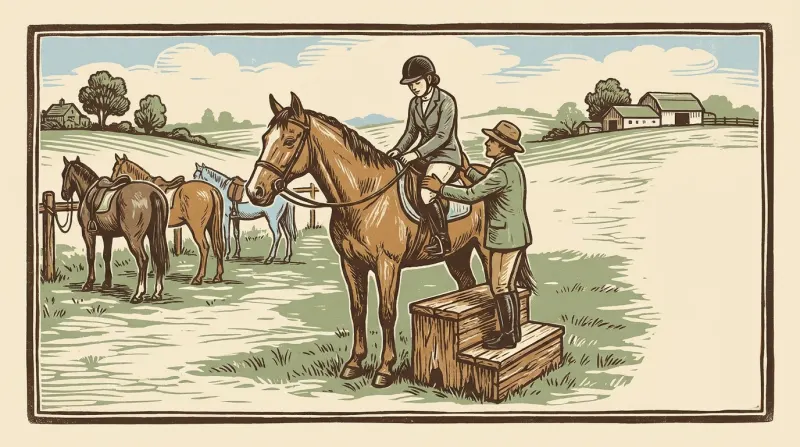
Many beginners feel more secure in a Western saddle at first because the deep seat and horn give them something to sit in and hold. That doesn't make Western easier to master. It just changes how the first rides feel.
| English | Western | |
|---|---|---|
| Saddle | Small, light, no horn, close contact | Large, deep seat, horn, weight spread wide |
| Reins | Two hands, light steady contact | Often one hand, looser rein, neck reining |
| Gaits | Walk, trot, canter | Walk, jog, lope |
| Trot | Usually posted (rising with the rhythm) | A slower jog, usually sat |
| Disciplines | Hunters, jumpers, equitation, dressage, eventing, saddle seat | Pleasure, horsemanship, reining, trail, ranch riding, cutting, barrel racing |
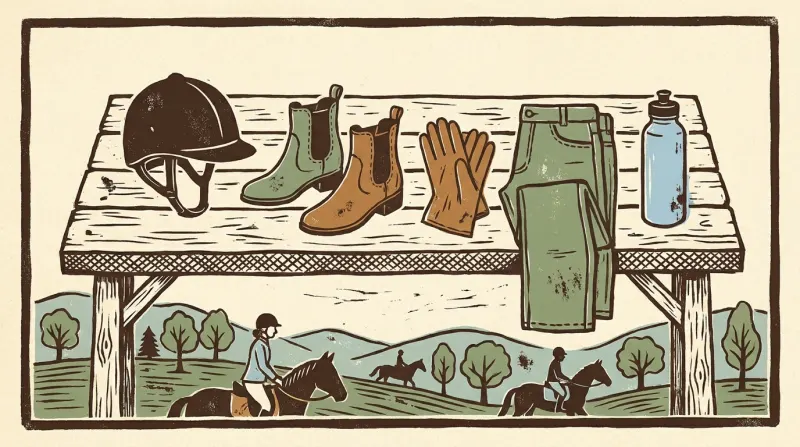
| Typical lesson clothes | Helmet, breeches, paddock or tall boots | Helmet, jeans, cowboy boots |
Holding the reins
English riders hold a rein in each hand and keep a light, steady connection with the horse's mouth, called contact. To turn, the rider mostly uses the inside rein together with their legs and weight. The idea is a constant, quiet conversation through the reins.
Western riders often hold both reins in one hand with some slack. To turn, they move the rein hand across, and the rein lying against the horse's neck tells it which way to go. This is called neck reining. It leaves the other hand free, which mattered for ranch work. Many Western lesson programs start beginners with two hands and teach neck reining later.
Gaits, and how you ride them
Horses have the same natural gaits in both styles, but the names and the way riders sit them differ.
- Walk. The same in both: four beats, slow and steady.
- Trot or jog. A two-beat gait. English riders usually post the trot, rising out of the saddle and sitting again in time with the horse's stride. Western horses are trained to jog, a slower and smoother trot that the rider sits.
- Canter or lope. A three-beat gait. The Western lope is a slow, relaxed canter.
Some breeds are especially common in one style. You'll see a lot of Quarter Horses and Paints in Western barns, and a lot of Thoroughbreds and warmbloods in English barns. But plenty of horses go well in both, and plenty of lesson horses are mixed breeds.
The disciplines
Once riders get past the basics, each style branches into disciplines, many with their own shows and competitions.
English
- Hunters, judged on the horse's style and smoothness over fences.
- Jumpers, scored on clearing the fences, usually against the clock.
- Equitation, judged on the rider's position and control.
- Dressage, a set test of precise movements on the flat.
- Eventing, which combines dressage, cross-country jumping and show jumping.
- Saddle seat, a showy style ridden on high-stepping breeds.
Western
- Western pleasure, judged on a calm, smooth, easy-to-ride horse.
- Horsemanship, the Western counterpart of equitation.
- Reining, a pattern of spins, circles and sliding stops.
- Trail class, an obstacle course of gates, bridges and poles.
- Ranch riding, which rewards a working ranch horse's way of going.
- Cutting and cattle events, working cows.
- Barrel racing, a timed run around three barrels.
Trail riding belongs to neither style. Many trail stables use Western saddles because they're comfortable for long rides, but you'll find English riders on trails too.
- Contact
- A light, steady connection between the rider's hands and the horse's mouth through the reins. Central to English riding.
- Neck reining
- Turning by laying the rein against the horse's neck, usually with one hand. Central to Western riding.
- Posting
- Rising and sitting in rhythm with the trot, so the rider isn't bounced.
- Horn
- The knob at the front of a Western saddle.
- Cantle
- The raised back of a saddle. It's much higher on a Western saddle.
- Jog and lope
- Western names for a slow, sat trot and a relaxed canter.
How to choose a style for lessons
There's no wrong answer. The basics carry over, and many riders switch styles or ride both later on. A few things help you decide:
- Your goal. If you dream of jumping or dressage, start English. If you want to ride trails, work cattle, try reining or barrel racing, start Western. If you just want to learn to ride well, either works.
- What's near you. A barn with a good instructor and well-kept lesson horses matters more than the style. Look at English riding lessons and Western riding lessons near you, or the full list of stables with riding lessons.
- The lesson horses. Ask which style the school horses are trained in. A barn may teach both but have more horses for one.
- Try both. A lesson or two in each style is the quickest way to find out which you enjoy.
Whichever you choose, wear a helmet. Many lesson programs require one in both styles. Our guide to choosing riding lessons covers the rest: private or group lessons, what a first lesson looks like, and how riders progress.
Questions
- Is Western riding easier for beginners?
- It often feels easier on the first few rides because the saddle is deeper and has a horn to hold. Both styles take the same time and practice to learn well.
- Can I switch from one style to the other?
- Yes. Balance, a quiet seat and soft hands carry over. Expect a short adjustment to the different saddle, rein handling and gaits.
- Is Western only for trail riding?
- No. Western has many arena disciplines, including reining, horsemanship, ranch riding and barrel racing. Trail riding is done in both styles.
- Do I need different boots for each?
- Any boot with a small heel and a smooth sole works for lessons in either style. Riders who stay with one style usually buy its traditional boots later.
Find lessons in either style
- English riding lessons, by state.
- Western riding lessons, by state.
- Stables that welcome beginners.