Boarding
How to choose a boarding barn
Where your horse lives shapes its health and your time with it. Here's how to compare board types, what to look at on a visit, what to ask, and what to get in writing.
Choosing a boarding barn is part practical checklist, part gut feeling. The checklist covers feed, water, fencing, turnout and who's there when something goes wrong. The gut feeling comes from the people and the horses already living there. This guide covers both. Board rates vary widely by region, by what's included and by the facilities, so we don't list prices. Ask each barn for its current rates in writing.
Types of board
Barns use a few common terms for what they include. The details always vary, so treat these as starting points and confirm exactly what a barn means.
| Type | Usually includes | You usually handle |
|---|---|---|
| Full board | A stall, hay and feeding, cleaning stalls, turnout and bringing horses in, daily checks | Riding, grooming, vet and farrier bills. Blanketing, holding for the vet and supplements may be extra |
| Partial board | Shelter and some of the daily care | An agreed share of the chores, such as cleaning your stall or some feedings |
| Pasture board | Living out in a field with a shelter, water and hay when grass is short | Most hands-on care. Ask whether grain or supplements are fed |
| Self-care board | A stall or paddock and access to the facilities | All feeding, cleaning and care, often with your own hay and bedding |
| Training board | Full board plus regular rides or lessons with the barn's trainer | Your own lessons and riding time, as agreed |
Many horses do well living out on pasture board with company, shelter and good hay, and some need the extra management of a stall. Your horse's age, health, coat and temperament all play a part, and your vet can help you decide.
What to look at on a visit
Visit every barn on your shortlist, and if you can, visit twice: once by appointment and once at a busy time such as feeding or after a heavy rain. Look at:
- The horses. This is the best single sign. Look for horses at a healthy weight, with clean coats, cared-for hooves and a relaxed manner.
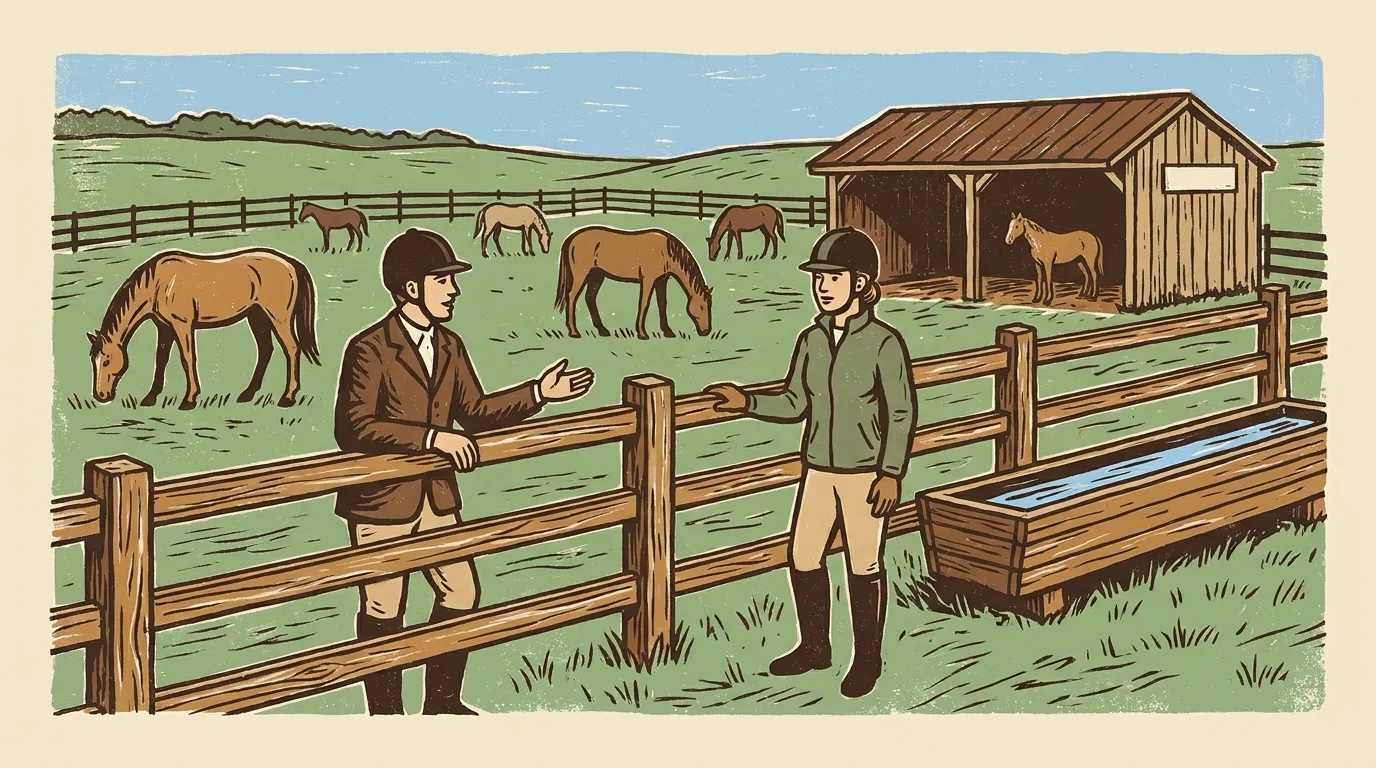
- Water. Clean water in every stall and field, with a plan for keeping it from freezing in winter.
- Stalls. Big enough for the horse to turn and lie down, with clean bedding, good airflow, and no sharp edges, nails or broken boards.
- Fencing. Sturdy, well maintained and made for horses. Board, pipe, mesh and electric tape are common. Barbed wire is widely considered a poor choice for horses.
- Turnout. How much space, how muddy it gets, whether there's shade and shelter, and how herds are grouped.
- Hay and feed. Hay stored dry and free of mold and dust. The feed room should be closed off, since a loose horse that gets into grain can become seriously ill.
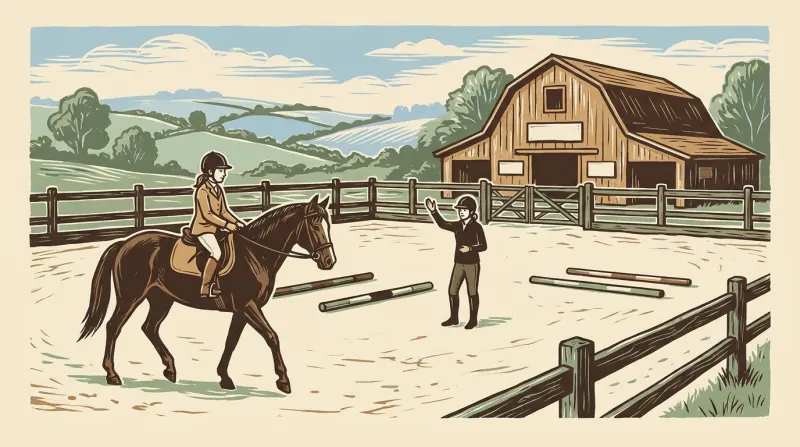
- Riding areas. The footing in the arena, lighting for evenings, an indoor arena if your winters are hard, and access to trails if you want them.
- Tack and storage. A secure, dry tack room, plus space for your trailer if you have one.
- Emergency readiness. Fire extinguishers, emergency numbers posted, clear exits, and a plan for moving horses out fast.
Tip
Talk to the current boarders. Ask what they like, what they'd change, and how quickly problems get fixed. People who've been there a while are usually happy to tell you.
The people
A barn is only as good as the people who run it. Find out who manages the barn day to day, how long they've done it, and who does the feeding and turnout. Ask whether someone lives on the property or checks the horses late in the evening. Notice how staff handle horses: calm and confident, or rushed and rough.
The boarding community matters too. Some barns are busy show barns with a trainer at the center. Others are quiet places where adults trail ride on weekends. Neither is better. Pick the one that matches how you want to spend your time.
Questions to ask the barn
- Feeding. How often are horses fed? What hay, and how much? Who supplies grain and supplements, and will staff feed what your vet recommends?
- Turnout. How many hours a day, alone or in a group, and what happens in bad weather?
- Blanketing. Is it included, and who decides when blankets go on and off?
- Vet and farrier. Can you use your own? Who holds your horse for visits if you can't be there, and is that extra?
- Health rules. Many barns ask for proof of a current negative Coggins test (a blood test for equine infectious anemia) and up-to-date vaccinations. Ask about the deworming program and whether new arrivals are kept apart for a while.
- Emergencies. Who calls the vet if your horse colics at night? How will they reach you, and what can they approve if they can't?
- Riding. When is the arena open? How busy is it during lessons? Can you bring in an outside trainer?
- Rules. Guests, dogs, kids, quiet hours, and any rules for riding alone.
- Extras. What costs extra? Get the full list in writing.
The boarding contract
A written contract protects both you and the barn. Before you sign, read it closely and check that it covers:
- What's included in your type of board, and the extras with their terms.
- Payment terms, including the due date and any late fees.
- Notice required to leave, and how much notice the barn gives before changing rates or terms.
- Emergency care. Your vet's details, and what the barn may authorize when you can't be reached.
- Liability and insurance. Many contracts include a release of liability, and some require you to carry insurance. Ask what insurance the barn holds for horses in its care, and consider insuring your own horse.
- Unpaid board. In many states, a boarding stable can place a lien on a horse for unpaid board. Know how your contract handles late payment.
- Barn rules, either in the contract or attached to it.
Ask for any spoken promises to be added in writing. If something in the contract worries you, ask a lawyer who knows equine law in your state before you sign.
Moving in
Have your horse's health papers, Coggins test and vaccination records ready before moving day. Some barns keep new horses in a separate area for a set period before they join the herd. Even if yours doesn't, a slow introduction to new turnout mates usually goes better than turning a new horse out with a group on day one. Watch your horse closely for the first couple of weeks. Changes in hay, water and routine can upset some horses.
Questions
- What's the difference between full and partial board?
- With full board, the barn handles daily care: feeding, stall cleaning and turnout. With partial board, you share some of those chores. Each barn defines the split differently, so get it in writing.
- Is pasture board a good choice?
- It suits many horses that do well living outside with company, shelter and good hay. Horses with certain health needs may need a stall. Ask your vet.
- What is a Coggins test?
- A blood test for equine infectious anemia. Many boarding barns and horse shows ask for a current negative result, and states set their own rules for horses that travel.
- Do I need insurance?
- Some barns require it. Ask what the barn's own insurance covers, and decide whether to insure your horse yourself.
- Why doesn't this site list board prices?
- Rates vary by region, board type and facilities, and they change. Ask each barn for its current rates and the full list of extras.
Find a boarding barn
- Horse boarding stables by state and city. A barn is listed for boarding only when a review or its own website mentions boarding.
- Stables with riding lessons, if you want a trainer on site.
- All riding stables by state.